


Jebel Akhdar or Jebel Shams: Where Should You Stay in Winter?
You have one night to spend in the mountains of Oman. Would you rather wake up overlooking terraced villages, with breakfast at a comfortable mountain hotel, or spend the morning looking across an enormous rocky canyon?
It’s a decision worth making before you finalise your itinerary.
Jebel Akhdar and Jebel Shams are both part of the Al Hajar Mountains, but they offer quite different experiences. Choosing between them depends less on which mountain is more beautiful and more on how you want to spend your time.
For a relaxed overnight stay with village walks, mountain scenery and comfortable resort options, Jebel Akhdar is generally the better choice. If your priorities are dramatic landscapes, photography and adventurous hiking, consider Jebel Shams.
Link International Tours offers private guided tours and customised mountain itineraries in Oman. If you’re unsure which destination fits your holiday, you can contact our team before deciding where to stay.
Comparing Jebel Akhdar and Jebel Shams in winter
| Experience | Jebel Akhdar | Jebel Shams |
|---|---|---|
| Landscape | Terraced farms, villages and valleys | Deep canyons and rugged cliffs |
| Main attractions | Village walks and agricultural heritage | Canyon viewpoints and the Balcony Walk |
| Accommodation | Mountain hotels and resorts | Mountain lodges, chalets and camps |
| Walking | Short village walks to longer trails | Scenic stops and exposed hiking routes |
| Winter evenings | Cold mountain air | Potentially near-freezing temperatures |
| Transport | Plan for a suitable 4WD | A 4WD is strongly recommended |
Both mountains are worth visiting. However, if you have only a few days in Oman, choosing one can leave you with more time to enjoy the rest of your holiday.
Jebel Akhdar: A slower mountain escape
Jebel Akhdar means the Green Mountain, although its landscape is not uniformly green throughout the year.
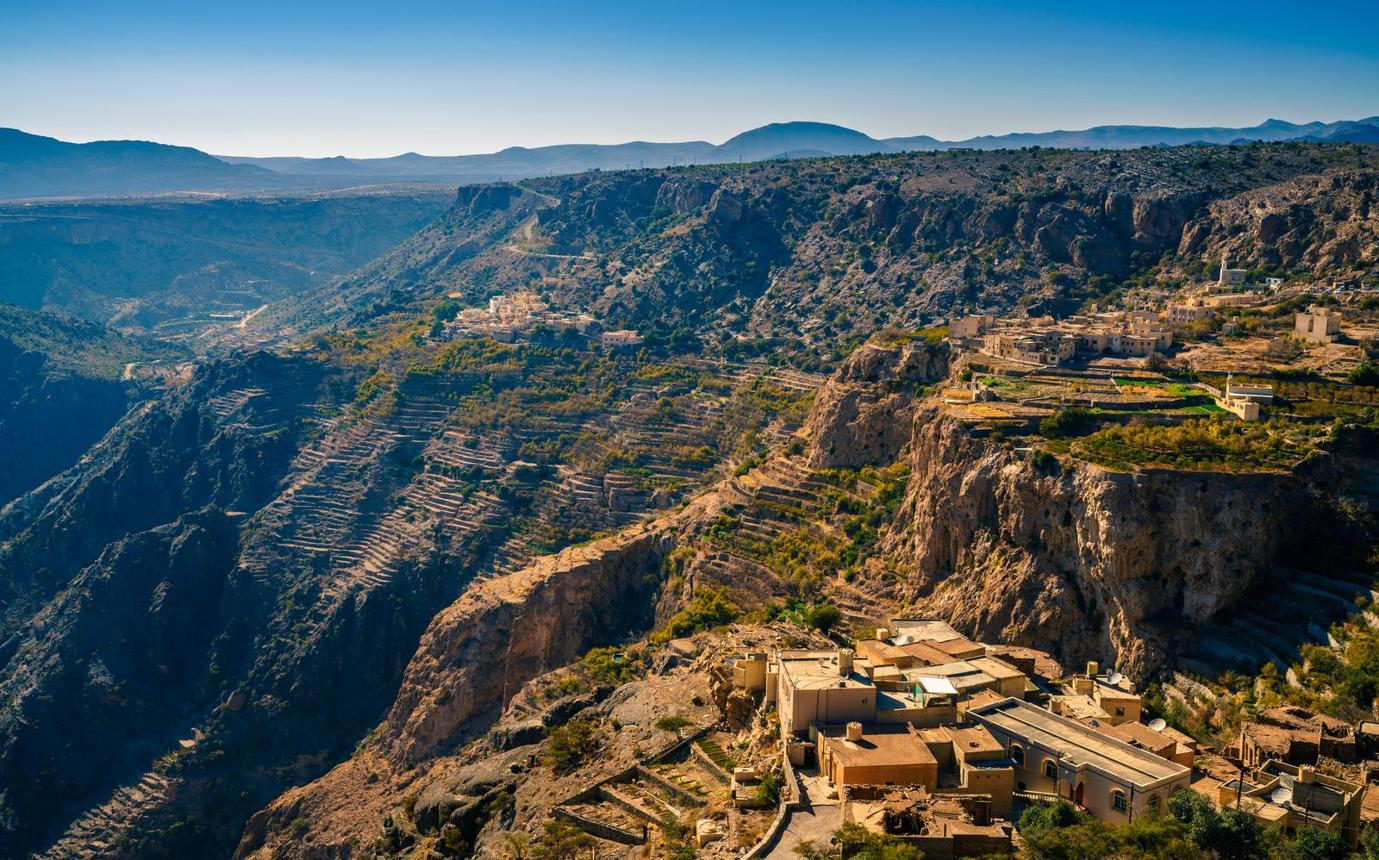
The Saiq Plateau is known for its agricultural terraces, where fruit trees and roses grow on carefully cultivated mountain slopes. Traditional irrigation channels, known as falaj, supply water to farms and help sustain village life.
The villages of Al Aqr, Al Ayn and Ash Shirayjah offer an opportunity to appreciate this relationship between the mountains and the communities that live there.
Rather than spending the entire day moving between viewpoints, consider allowing time for a village walk. The stone pathways, agricultural terraces and traditional houses provide an interesting contrast to Muscat’s coastal scenery.
Remember that these are residential and agricultural areas. Stay on permitted paths, dress respectfully and ask before photographing people.
Is winter a good time to visit Jebel Akhdar?
Yes, particularly if you enjoy sightseeing and walking without the heat of the lowlands.
However, winter isn’t rose season. According to Experience Oman, rose flowering and rosewater production are associated with spring, generally between March and May.
If seeing flowering rose terraces is the main reason for your visit, travelling later in the year may suit you better.
Between December and February, the attraction is the mountain landscape itself, the villages and the opportunity to enjoy a quieter pace.
Pack warm clothing for the evening. A sunny afternoon on the plateau can feel quite different once the sun disappears behind the mountains.
Who should choose Jebel Akhdar?
Jebel Akhdar is worth considering for couples who enjoy comfortable accommodation, travellers interested in village life and families who prefer flexible sightseeing rather than lengthy hikes.
It’s also a sensible option if you want to combine mountain scenery with a visit to Nizwa.
That doesn’t mean every village walk is easy. Steps, uneven surfaces and steep paths can be challenging for visitors with limited mobility. Discuss walking requirements before choosing your route.
Jebel Shams: For canyon views and outdoor adventure
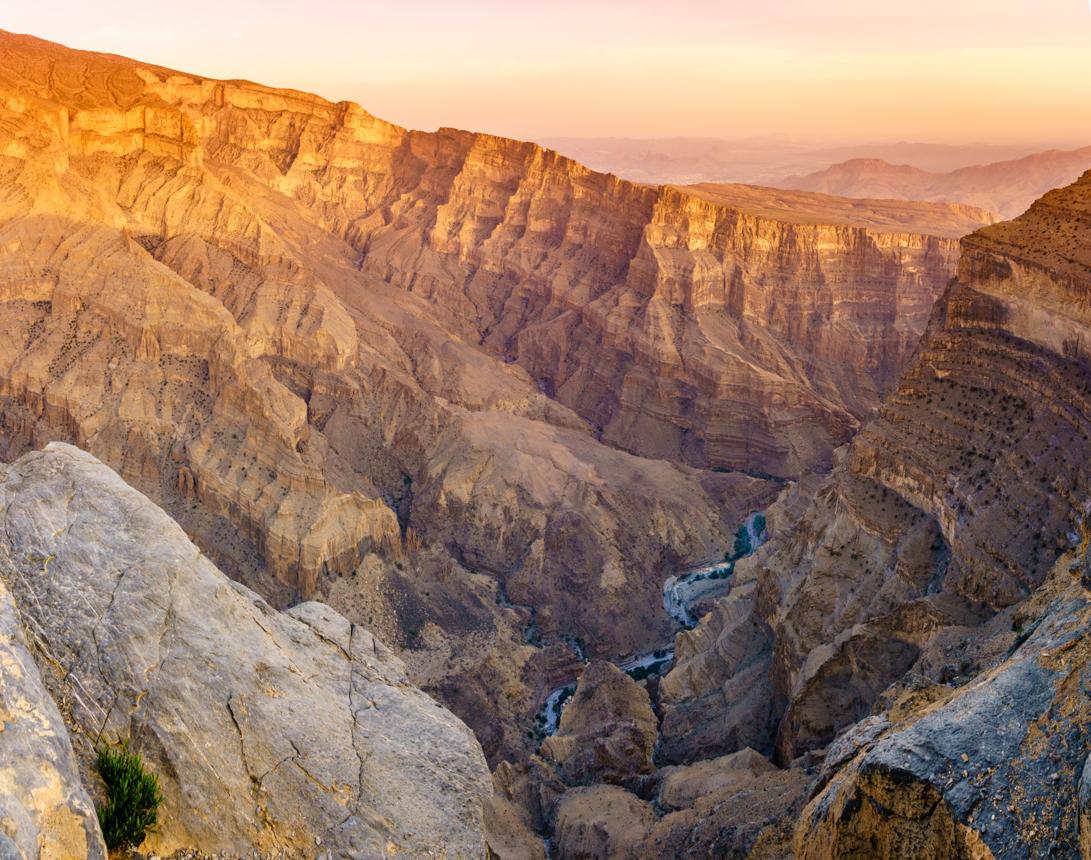
Jebel Shams is Oman’s highest mountain and is particularly well known for the dramatic canyon beneath it.
Here, the landscape is dominated by layered rock formations, steep cliffs and deep ravines. For photographers and travellers who enjoy large, open landscapes, the views alone can justify the journey.
You don’t have to climb the mountain’s summit to appreciate the scenery. A visit can focus on selected canyon viewpoints, with longer walking activities added if they suit your interests and the conditions.
Should you attempt the Balcony Walk?
The Balcony Walk, also known as the W6 trail, follows the canyon rim and is one of the area’s signature hiking experiences.
Its appeal comes with an important consideration: parts of the route are exposed to steep drops. Uneven ground and loose stones require care, and the trail may not suit people who are uncomfortable with heights.
Allow several hours if you plan to undertake the full walk, including breaks and the return journey. Check local trail conditions before setting off and carry sufficient drinking water, suitable footwear and sun protection.
Jebel Shams Resort’s trail guidance also recommends checking whether conditions are suitable on the intended day.
There’s no obligation to complete the hike. A shorter sightseeing visit can be a better choice for some groups.
How cold are Oman’s mountains in winter?
One of the easiest mistakes to make is packing for Muscat and forgetting about the mountains.
Oman’s coastal areas generally experience milder winter weather, but the higher elevations can be considerably colder. At Jebel Shams, winter nights can approach freezing, according to the local resort’s visitor information.
For an overnight mountain stay, bring:
- A warm jacket or fleece.
- Layers suitable for changing daytime temperatures.
- Comfortable trousers and sturdy walking shoes.
- Sun protection and drinking water for outdoor activities.
- Warmer clothing for early mornings and evenings.
These are general seasonal considerations, not a forecast for your travel dates. Check Oman Meteorology before departure, particularly if your plans include exposed mountain trails.
Getting there: Do you need a 4WD?
The transport arrangements are slightly different for each mountain.
For Jebel Akhdar, the established access arrangement involves a vehicle checkpoint near Birkat Al Mouz. A suitable four-wheel-drive vehicle remains the straightforward option for most visitors.
There has also been a recent development. On 13 October 2026, the Oman Observer reported that electric vehicles were permitted to access the mountain without four-wheel drive, following an announcement by Visit Oman’s managing director.
Some accommodation providers still publish the traditional 4WD requirement. If you’re considering an electric vehicle, confirm current checkpoint requirements directly before travelling.
For Jebel Shams, the final mountain approach involves steep road sections. A suitable 4WD is strongly recommended, and current road conditions should be checked before departure.
If you’d rather concentrate on the scenery than mountain driving, ask about private transport. A driver handles the journey, whereas a tour guide can provide cultural explanations and accompany suitable sightseeing activities. Confirm which service your booking includes.
How to spend two days in the mountains
If you have two days and one overnight stay, consider one of these suggested routes.
Option 1: Nizwa and Jebel Akhdar
Spend the first part of your trip exploring Nizwa before continuing towards Jebel Akhdar.
Allow time to settle into your accommodation and enjoy a mountain viewpoint in the afternoon. The following morning, choose a village walk or relaxed sightseeing before continuing your journey.
This option works particularly well when you want a balance of heritage, scenery and comfortable accommodation.
Option 2: Jebel Shams and the canyon
Travel towards Jebel Shams through the interior of Oman, keeping sightseeing stops manageable so that you reach your accommodation during daylight.
Spend the afternoon enjoying the canyon scenery. The next morning, consider the Balcony Walk if the weather, trail conditions and your group’s abilities make it appropriate.
Alternatively, enjoy selected viewpoints before returning towards the lower elevations.
These are suggested itineraries rather than fixed packages. Driving times, stops and accommodation arrangements need to be confirmed for your dates.
What to check before booking a mountain hotel
A beautiful photograph of a canyon-facing room doesn’t tell you everything about an overnight stay.
For winter travel, ask whether your chosen accommodation provides effective room heating, warm bedding and evening meals. Check how far it is from the viewpoints or walking routes you want to visit.
If you’re travelling with children or someone who has difficulty with steps, ask specifically about access between the rooms, restaurant and parking area.
Sometimes, a night in Nizwa followed by a mountain excursion is a better arrangement than staying at altitude, particularly if you prefer milder evenings.
Plan your private mountain tour in Oman
Neither mountain needs to be treated as another destination to tick off a list.
Choose Jebel Akhdar if you want village scenery, agricultural heritage and a relaxed overnight stay. Choose Jebel Shams if canyon landscapes and outdoor exploration are what draw you to Oman.
If you have enough time, both can form part of a longer journey through the country’s interior.
Link International Tours offers customised Oman tours, mountain excursions and private transport services. Send us your travel dates, group size, preferred pickup location and whether you’re interested in walking, sightseeing or an overnight stay.
We’ll discuss suitable options and prepare a quotation based on your requirements and availability.
Contact Link International Tours
WhatsApp: +968 7228 0555
Email: info@lnkoman.com
Website: www.lnkoman.com
An enquiry is the first step in planning your trip and does not confirm a reservation.
